
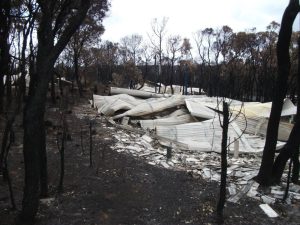
Dwelling destroyed by out-of-control prescribed burn in Margaret River. Source: Report on “Investigation of the house losses in the Margaret River Bushfire 23 November 2011”, Department of Fire & Emergency Services, October 2012.
Under State legislation DBCA is not responsible for any damage caused by out-of-control prescribed burns.
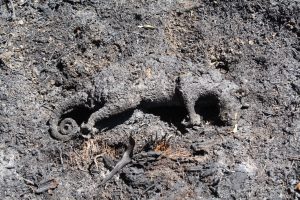
A critically endangered ringtail possum after Warrungup Spring prescribed burn in 2018. Source: Allison Dixon.
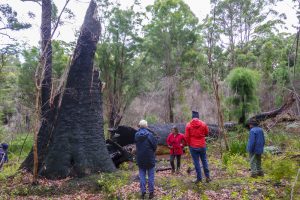
Fallen tingle tree following the December 2024 Giants East prescribed burn.
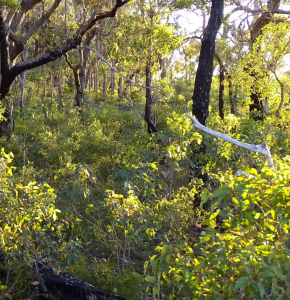
Dense understorey in jarrah forest after burning. Source: Philip Zylstra, http://theconversation.com.

Dense understorey regrowth of karri wattle and karri hazel in tingle forest following prescribed burning. Source: Icons to Ashes.
FACT: Immediate detection and rapid suppression of ignitions is the safest and most effective way to protect life, property and biodiversity from wildfires (Fact Sheet 8).
FACT: Prescribed burning in our forests is a waste of money (Fact Sheet 10).
FACT: Prescribed burning causes losses in the agricultural and tourism industries, loss of ecosystem services and GHG emissions that contribute to climate change.
Unintended societal costs of prescribed burning in south-west forests amount to hundreds of millions of dollars annually (Fact Sheets 7, 13, 14).
Fact Sheets Volume 1
Fact Sheets Volume 2
Click the front covers above to download complete Fact Sheets volumes (about 5MB each).
You can also purchase hard copy printed versions – $10 including postage HERE.
Here are the topics covered in each Fact Sheet volume:
In Volume 1:
1 FACT VS FICTION
2 PRESCRIBED BURNING DOES NOT REDUCE THE AREA OF WILDFIRE
3 PRESCRIBED BURNING REDUCES BIODIVERSITY
4 PRESCRIBED BURNING IS BAD FOR HUMAN HEALTH
5 BURNING STIMULATES GROWTH AND INCREASES FLAMMABILITY
6 DBCA PRESCRIBED BURNING HAS NO SIMILARITY TO INDIGENOUS BURNING
7 PRESCRIBED BURNING INCREASES GREENHOUSE GAS EMISSIONS
8 WILDFIRE CAUSES AND BEHAVIOUR
9 CLIMATE AND FORESTS
In Volume 2:
10 PRESCRIBED BURNING IN FORESTS WASTES MONEY
11 PRESCRIBED BURNING DESTROYS BIODIVERSITY
12 PRESCRIBED BURNS ARE JUST AS SEVERE AS WILDFIRES
13 TREE FALLS
14 THE COLLATERAL COSTS OF DBCA’S PRESCRIBED BURNING
15 WHY DOES DBCA BURN THREATENED SPECIES?
16 CHANGES NEEDED TO BALANCE COMMUNITY PROTECTION & BIODIVERSITY